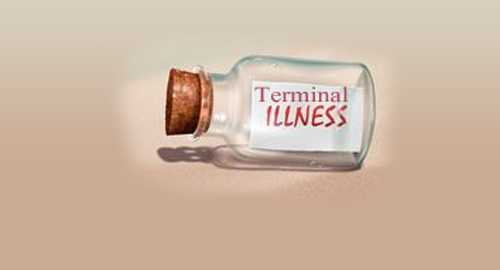
Terminal illness is a disease that cannot be cured or adequately treated, and is usually expected to result in death within a short period of time. Terminal illness is mostly associated with cancer, though it may also relate to other conditions like advanced heart disease. In medical timelines, one is considered terminally ill if they are expected to die within six months. The six month standard is arbitrary though, and the estimation is never accurate.
Read more .....
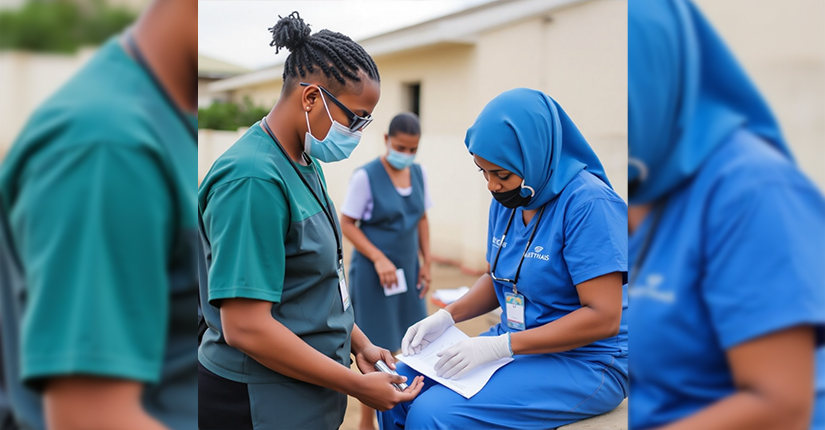
The world is full of services that could do with volunteers now and again. Healthcare is no different, services tend to be stretched to the limits especially with inadequate healthcare workers in our part of the world. You do not have to be formally trained as a nurse or doctor to be eligible for some voluntary work in healthcare.
Read more .....
Reproductive healthcare is very much akin to any other service provision industry. There are quality standards to be met, equally balanced by service provision targets. Sometimes things fall short, and you may find yourself on the aggrieved end. Dealing with human life demands much more than a casual approach to service delivery. There is so much potential for things to go wrong in reproductive healthcare.
Read more .....

Your unborn baby is usually surrounded by fluid, commonly known as ‘waters’. The waters are contained in a sac medically called membranes. Normally, the waters break shortly before or during labor. If this happens at less than 37 weeks of pregnancy before labor ensues, it is referred to as preterm premature rupture of membranes. Two out of every 100 pregnant women experience premature breakage of their waters.
Read more .....
The world ranking for the care of the elderly is just hot off the press. The elderly population, geriatrics in medical terms, is not as much in Kenya as in developed countries. Kenya is estimated to have about 1.8 million people over the age of 60 years. But our life expectancy is on an upward trend and this number is expected to double by 2050. We’ll be contributing to anticipated world statistics in 2050, when the population of older people will surpass the under 15s for the first time ever.
Read more .....

Dealing with end of life illnesses

Terminal illness is a disease that cannot be cured or adequately treated, and is usually expected to result in death within a short period of time.

Terminal illness is mostly associated with cancer, though it may also relate to other conditions like advanced heart disease. In medical timelines, one is considered terminally ill if they are expected to die within six months. The six month standard is arbitrary though, and the estimation is never accurate.

The diagnosis of terminal illness, either in yourself or loved ones can be difficult to deal with. The realization of impending demise introduces a whole range of reactions. You will go through various stages of acceptance, ranging from disbelief to extreme anxiety, shock, despair and anger. Slipping into depression is real, and this may last for a few weeks or even throughout the course of the illness. The end goal is to find some acceptance of the diagnosis, and the eventual inevitability of death.

Decisions on medical management of terminal illness must be carefully considered. By definition, a cure or adequate treatment is unachievable. The focus then must be directed at easing suffering such as pain, breathing difficulties, feeding etc. Aggressive treatment in the hope of unexpected cure is usually futile. So is blind pursuance of unproven therapies that may range from herbal to complementary treatments. Resorting to palliative care to relieve symptoms and improve quality of life in the last days is a more practical approach. This can either be done at home surrounded by loved ones, or in a care facility such as a hospice.

More controversial end of life options have been in the limelight in the recent past.You may have heard of mercy killing, known as euthanasia in medical terms. This is the practice of medically-assisted suicide in terminally ill patients to prevent prolonged suffering, where the prospect of cure or realistic relief of extreme symptoms is non-existent. Euthanasia has gained more and more acceptance over the years, and is legally permissible in some countries. Various forms of euthanasia are available, ranging from self-administered lethal medications to physician assisted suicide in euthanasia clinics.

The decision to end your own life whilst faced with a terminal illness is not easy by any means. It must be well thought out whilst still of sound mind. Loved ones may find it hard to accept such a choice, but they may also get some relief once your suffering comes to an end. None of us really knows what goes through the minds of those suffering from terminal illnesses that can only end in one way. We cannot be prescriptive and overly judgmental. Our role is to facilitate care that respects hard choices and dignity when medical interventions can no longer sustain life. The terminally ill are entitled to choose when and how to die, even if we may find it unpalatable.

Take a fertility test today

Volunteering as a lay health worker

The world is full of services that could do with volunteers now and again. Healthcare is no different,services tend to be stretched to the limits especially with inadequate healthcare workers in our part of the world. You do not have to be formally trained as a nurse or doctor to be eligible for some voluntary work in healthcare.

All you need is time to spare, and some passion to do some good. You will not be doing it for money either, it’s all voluntary, remember? You will end up doing some chores for the sick, which they will treasure for the rest of their days. But you also accrue some benefits. You will get new connections, learn new skills, interact with role models, and generally feel good in yourself. Who knows, you might even end up finding a new career!

You will need some basic person specifications to be suitable as a lay healthcare volunteer. The skills you need include some basic level of education, good communication, high integrity, ability to work as part of a team and other soft skills. You want to be sure that you would be comfortable working in an environment where encounters with the sick is commonplace. Any cold feet should get you volunteering elsewhere, say the food industry for example.

Once you decide voluntary health work is for you, the next step is to select the healthcare setting where your services may be required. This could be in a hospital setting, an outpatient centre or even in a remote locale with some unwieldy epidemic. Most healthcare institutions have voluntary programs that you can fit into, you only need to ask. You will normally be taken through some vetting to make sure you are the right type. Be sure you are very clear why you want to volunteer, and for how long. Any ulterior motives will get you rejected before you even start.

Your tasks as a lay volunteer will be mostly non-medical, even though you may inevitably end up with some mundane non-skilled medical chores. You might be assigned to help out at the reception areas, guiding patients and their accompanying folk as they come along. You may end up in the medical records department, helping out with filing or inputting codified data. Or you might even spend some time helping out with customer relations. You could even suggest where you think your skills fit best. The idea is to help out as much as possible.

If you have the time, and some skills that you could offer, consider volunteering in healthcare. You will make a difference in other peoples’ lives. Your day to day encounters with the sick may be all they need to feel better and heal quicker. You will also get enriched in other ways.

Take a fertility test today

Dealing with dissatisfaction in healthcare

Reproductive healthcare is very much akin to any other service provision industry. There are quality standards to be met, equally balanced by service provision targets.Sometimes things fall short, and you may find yourself on the aggrieved end.

Dealing with human life demands much more than a casual approach to service delivery. There is so much potential for things to go wrong in reproductive healthcare.And this happens now and again. It may be a delay in getting your results, an unexpected complication or rarely a fatality. Whatever it is, a measure of dissatisfaction arises. Cracks begin to emerge between you and your care providers. How do you deal with this?

If you get dissatisfied with any aspect of your reproductive healthcare, you must always find a way of getting things redressed. Seek out a member of your healthcare team and discuss your concerns with them. A face to face discussion may all that might be required to iron out the issues at hand. Spell out your grievances clearly, and be upfront about what your expectations are. No point raising your temperatures to near physical confrontation. Most issues arise due to poor communication between patients and their carers, and matters get easier once communication gaps are sorted out.

A verbal response may not always satisfy your grievances. This opens up the avenue for a written complaint. Each healthcare provider should have clear guidelines on how to do this. Again be very explicit about what the matter is. You should expect a rapid response. An apology should come your way pretty quick, without necessarily being an admission of liability. You also want to hear about new measures that will be put in place to minimize the chance of a similar event happening again. You should expect a relatively senior person to be part of the team responding to you.

You may feel that you are owed some form of compensation depending on what may have transpired. Some cases are pretty obvious, and a mutually agreed compensation package may be easy to come up with. That may help deal with some of the consequences resulting from the service provision gaps. It is not unusual sometimes to feel the need for legal redress. But don’t head to the courts for the sake of it.What you want is a timely redress to wanting service, not a prolongation of your agony with unending legal hurdles.

Raising issues about dissatisfaction with healthcare is aimed at improving subsequent service, and not merely a pursuit of blame and compensation. Once matters are resolved, you should expect subsequent care to be a notch higher. But continue being vigilant, you deserve the highest quality of healthcare.

Take a fertility test today

When your waters break too early in pregnancy

Your unborn baby is usually surrounded by fluid, commonly known as ‘waters’. The waters are contained in a sac medically called membranes. Normally, the waters break shortly before or during labor. If this happens at less than 37 weeks of pregnancy before labor ensues, it is referred to as preterm premature rupture of membranes. Two out of every 100 pregnant women experience premature breakage of their waters.

You should suspect that your waters have gone if you notice a sudden gush of fluid through the vagina. Sometimes the amount of fluid may just be a trickle, making you feel dump. The water tends to be clear or pinkish, but sometimes may be blood-stained or greenish.Leakage of urine is common in pregnancy, and may be confused with breaking of the waters. But if in doubt, it’s best to assume that the waters are leaking.

If your waters are leaking, wear a pad and not a tampon. Immediately contact your pregnancy care team and go for a check-up. This involves assessing the status of the baby and doing an examination to confirm the leakage. Additional tests will be done to exclude infection, and an ultrasound scan to further assess the baby and quantify the amount of fluid left.

If leakage of the waters is excluded, nothing further needs to be done. But you will be advised to keep a close watch on further signs of leakage. If your waters have broken, you may be advised to stay in the hospital for about 24 to 48 hours for further monitoring. You will also be given antibiotics to prevent infection setting in. Depending on the duration of the pregnancy, you may also be given injections to aid the baby’s survival if born too early. Sometimes you may also require some medications to stop contractions and delay the onset of labor.

Majority of women with premature leakage of waters can be allowed to go home and be monitored as out-patients. You will be asked to check your temperature frequently, assess the color of the fluid and avoid vaginal intercourse. You should return to hospital immediately if you develop a fever, the fluid turns bloody or greenish, you start experiencing pains or contractions, or if the baby stops being active. If everything remains stable, you’ll be given appointments for regular check-ups.

Most women will spontaneously go into labor within the first week after the waters have gone. If well before 34 weeks, it is desirable to prolong the pregnancy closer to between 34 and 37 weeks. This is because babies born too prematurely have many problems with breathing, feeding and infection. But in some situations, especially if infection sets in, delivery must be expedited to prevent more serious infection occurring in you and your unborn baby.

Take a fertility test today

Caring for our senior citizens

The world ranking for the care of the elderly is just hot off the press. The elderly population, geriatrics in medical terms, is not as much in Kenya as indeveloped countries. Kenya is estimated to have about 1.8 million people over the age of 60 years.

But our life expectancy is on an upward trend and this number is expected to double by 2050. We’ll be contributing to anticipated world statistics in 2050, when the population of older people will surpass the under 15s for the first time ever.

Sweden has been ranked top for the care of the elderly, not for the first time in matters of health. And Kenya?We did not even make it to the rankings, thanks to the lack of readily available comparative data. A guestimate would possibly rank us much further down the list. The Swiss geriatric population can expect the best of care, they are the envy of everyone else. So, what are the Swiss doing that others cannot do, including ourselves?

Geriatrics have special health needs, both physical and psychological. Their care must be multi-faceted, spanning from direct family care, to public or private institutional care. Funds, physical infrastructure and professional expertise are among the things that must be in place. The rest is unwavering commitment to caring for the elderly.

Majority of elderly care in Kenya is borne by family members. This can sometimes be an uphill task, both financially and emotionally. The moral duty of care for our senior citizens cannot be ignored. We must treat our elders with respect and dignity. They need help with simple physical tasks, and ongoing emotional support. And they will need medical help time and again.

We must plan well in advance on the best ways of caring for an increasing aging population. Counties should aim to keep elder people engaged in economic activities for as long as possible. Research indicates a disproportionate higher risk of death, especially in men, shortly after retirement. Let’s keep them working for longer, and better manage pension schemes to cater for financial needs.

County governments must also create enabling environments to cater for daily needs of the elderly. Simple things like concessions on public transport and easy access to buildings make day to day activities easier. Older people must be able to especially access healthcare services. We must make these affordable, well-staffed and stocked to cater for special health needs of the increasing older population. Counties should also have the capacity to run affordable nursing homes.

Wealth is not the only factor that played a role in high rankings for the countries with good elderly care indices.Countries like Sri Lanka and Bolivia ranked higher than much wealthier nations. We too can put workable processes in place and manage what we have better. Health benefits will accrue for all of us as we grow older.

Take a fertility test today
error: